
You probably don't notice how many times you bend, reach, twist, or grip while getting dressed—until one morning, one of those simple movements doesn't feel so simple anymore. Pulling on a pair of socks, fastening a shirt, or slipping into your shoes can suddenly take much more effort than you ever expected.
That doesn't mean you've lost your independence. It often means your routine needs a little extra support. With a few practical dressing aids, many everyday tasks become easier, safer, and far less tiring. This guide introduces the tools that can help make mornings feel comfortable and confident again.
Why getting dressed becomes more difficult with age
Getting dressed involves more bending, reaching, gripping, and balance than most people realise. As we age, those everyday movements can become more challenging because of:
-
Reduced flexibility, making it difficult to reach your feet or pull on clothing.
-
Arthritis or joint pain that makes buttons, zippers, and fasteners uncomfortable to manage.
-
Weaker grip strength, making it harder to hold or pull clothing.
-
Recovery after hip or knee replacement, when bending may be restricted.
-
Fatigue, which can make even simple morning tasks feel tiring.
These changes often happen gradually, which is why many people adapt without realising how much extra effort they're putting into their morning routine. The right dressing aid doesn't change what you wear—it simply helps you do familiar tasks with greater ease and confidence.
Adaptive dressing aids are designed to work around these challenges, allowing many people to continue dressing independently. Occupational therapists often recommend these tools because they support safer, more comfortable daily routines.
Sock and stocking aids: the most commonly needed tool
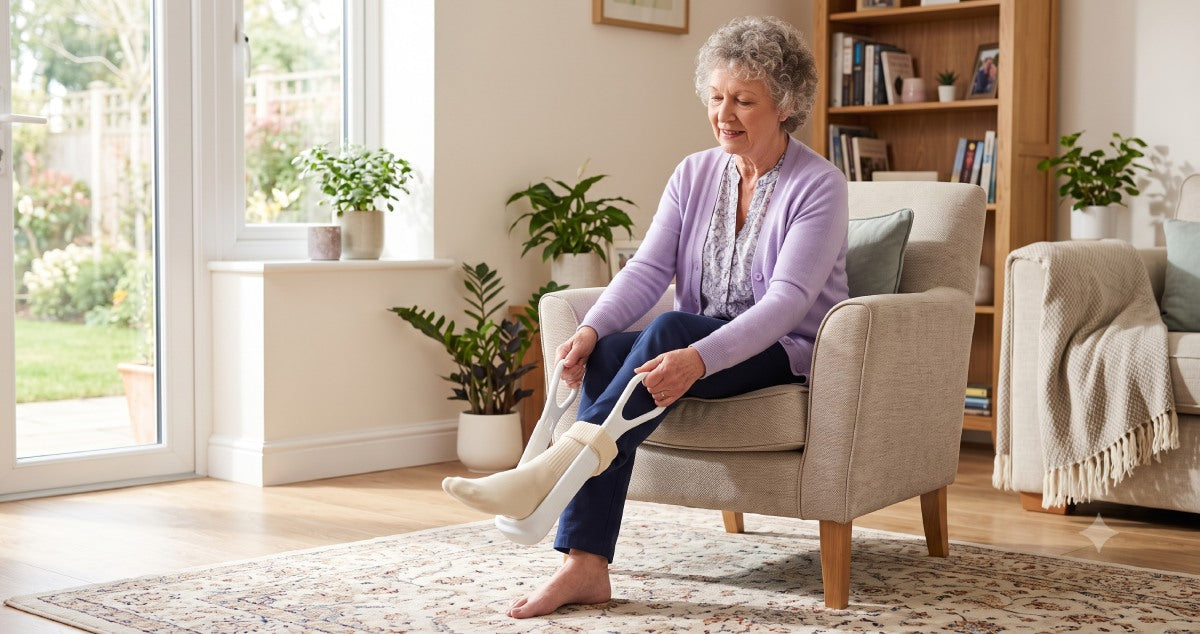
For many people, putting on socks is the first part of dressing that becomes difficult. Bending far enough to reach your feet can be uncomfortable after surgery, with back pain, or when flexibility is limited.
A sock aid allows you to slide your foot into a sock without bending. Simply place the sock over the frame, lower it to the floor, insert your foot, and pull the straps to guide the sock into place.
Many sock aids also work with stockings, and they're available in different sizes and styles to suit different users and different types of socks, including wider designs for those who need extra room.
For many people, a sock aid is the first adaptive dressing tool they try because it solves one of the most common everyday challenges quickly and with very little practice.
Browse Sock & Shoe Aids
Button hooks and zipper pulls
Small fasteners can become surprisingly difficult when finger strength or dexterity is limited.
Button hooks help pull buttons through buttonholes with much less effort, while zipper pulls create a larger grip that's easier to hold than a standard zipper tab.
These inexpensive tools can make shirts, trousers, jackets, and coats much easier to manage independently.
Browse Dressing Aids
Long-handled tools: reachers, shoehorns, and dressing sticks
Sometimes the challenge isn't getting dressed—it's reaching the clothes, shoes, or other items you need in the first place. Long-handled dressing tools help reduce bending, stretching, and awkward movements that can cause discomfort.
A long-handled shoehorn makes it easier to slide your feet into shoes without bending, while helping protect the back of the shoe from damage. Reachers allow you to pick up clothing, retrieve dropped items, or pull garments closer from a seated position. Dressing sticks combine multiple functions, making it easier to pull on clothing or manage shoes with one simple tool.
Browse Reachers and the Getting Dressed hub to explore solutions for everyday dressing.
Grooming aids that complete the morning routine
Getting ready doesn't end once you're dressed. Brushing your hair, grooming, and other personal care tasks can also become more difficult when reaching overhead or behind your back is uncomfortable.
Long-handled grooming aids are designed to extend your reach while helping you stay independent during your morning routine. Many people find that combining dressing and grooming aids creates a smoother, less tiring start to the day.
Browse Grooming Aids for helpful everyday solutions.
Shop dressing aids at ElderShoppe
A few well-designed tools can make mornings feel easier again. Whether you need help putting on socks, fastening buttons, reaching your shoes, or completing your grooming routine, the right dressing aid can help you stay independent and confident.
Many people begin with just one tool that solves their biggest daily challenge, then add others as their needs change. Even a small improvement in your morning routine can make a noticeable difference to comfort, confidence, and independence.
Explore:
Disclaimer: This article is for general informational purposes only and is not medical advice. If you are recovering from surgery, managing a specific medical condition, or unsure which dressing aids are appropriate for your situation, please consult your physician or an occupational therapist for personalised guidance.
Published by the ElderShoppe Team | eldershoppe.com
Questions? Call us at (866) 533-2771 or email info@eldershoppe.com