
A jar lid that used to twist open easily suddenly feels stubborn. A pen slips from your fingers, or buttoning a shirt takes twice as long. When arthritis or weakness after a stroke affects your hands, small everyday tasks can become surprisingly frustrating. Gentle, consistent exercises may help improve strength, flexibility, and coordination over time.
Why hand strength matters for daily independence
Your hands quietly power many everyday activities, from holding a cup and using a phone to opening containers and getting dressed. Maintaining hand strength and range of motion can support greater independence and make daily tasks feel more manageable.
Hand exercises are commonly included in occupational and physical therapy programs for arthritis and stroke recovery. They can also be useful for general stiffness related to reduced hand use. The goal is not to force movement, but to keep the hands moving comfortably and consistently.
Who benefits from hand exercises?
Gentle hand exercises may benefit people experiencing:
-
Osteoarthritis or rheumatoid arthritis — stiffness and discomfort can affect finger, thumb, and wrist movement.
-
Post-stroke weakness — reduced strength or coordination may make everyday hand movements difficult.
-
Hand injuries — exercises may support movement during recovery when recommended by a professional.
-
Age-related stiffness — regular movement can help maintain flexibility when hands become less active.
For post-stroke recovery, exercises should be guided by a physiotherapist or occupational therapist. The Arthritis Foundation’s hand exercise guidance can also provide general information for people with arthritis.
Five gentle exercises to try
These simple movements can be done without equipment. Move slowly and comfortably, and stop if you experience significant pain.
1. Finger bends — Hold your hand flat, slowly bend the top two finger joints into a gentle hook, then straighten. Repeat 10 times.
2. Full fist — Open your hand, then slowly close it into a comfortable fist. Hold for 2–3 seconds before opening. Do not force the fingers closed.
3. Finger spread — Place your hand on a table, gently spread your fingers apart, then bring them together. Repeat 10 times.
4. Thumb touches — Touch your thumb to each fingertip in sequence, then reverse the order. Repeat five times in each direction.
5. Wrist circles — With your elbow supported, slowly circle your wrist five times in each direction.
Using a rehab hand exercise ball
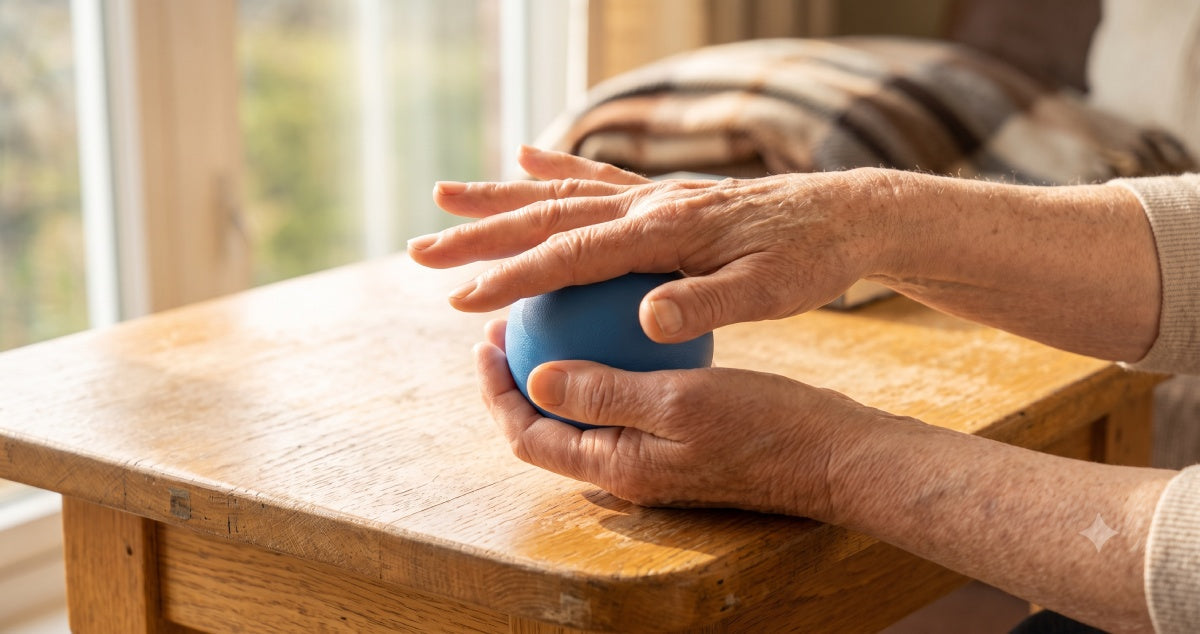
Once basic movements feel comfortable, gentle resistance can add another dimension to your routine. The Soft Rehab Hand Exercise Ball is made from flexible vinyl with a soft density. Priced at $9.95 and made by Briggs Healthcare, it provides a simple option for gentle squeezing exercises.
Hold the ball comfortably, squeeze gently for 3–5 seconds, and release. Repeat 10 times per hand, or follow the guidance provided by your rehabilitation professional.
Shop rehabilitation and exercise aids at ElderShoppe
Disclaimer: This article is for general informational purposes only and is not medical advice. The exercises described are general in nature and are not a substitute for assessment or treatment by a qualified healthcare professional. If you are recovering from a stroke or managing a diagnosed hand condition, please consult your physiotherapist, occupational therapist, or physician before proceeding.
Published by the ElderShoppe Team | eldershoppe.com Questions? Call us at (866) 533-2771 or email info@eldershoppe.com