
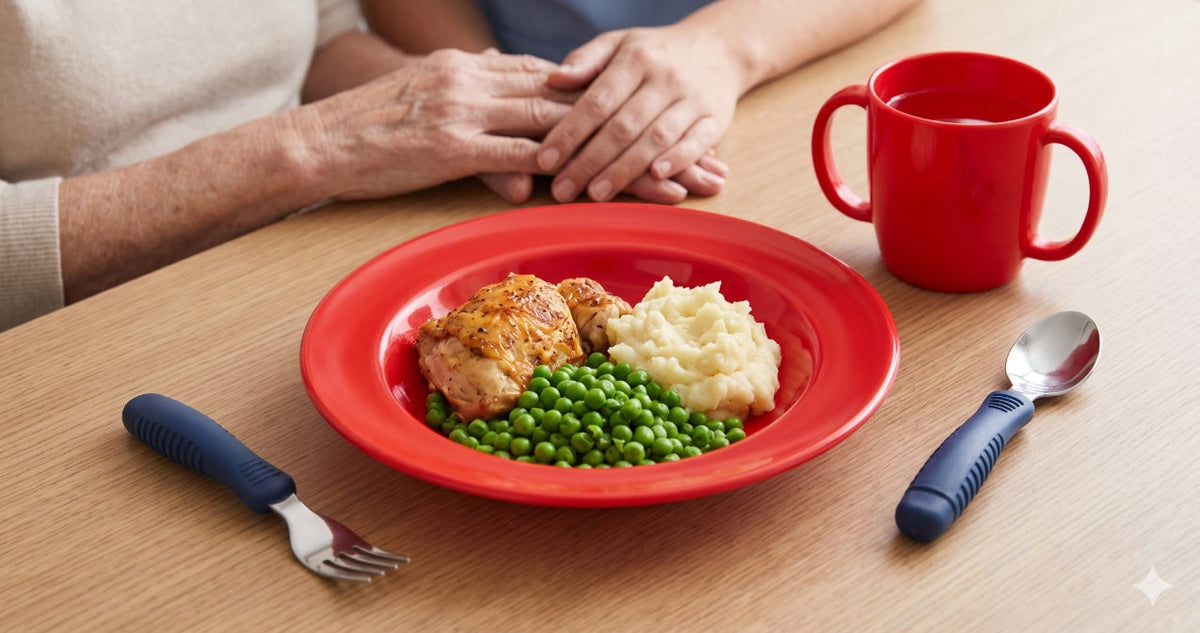
A meal should be about enjoying the food, not struggling with the plate. But when someone has dementia, even recognising food against a plate or lifting a cup without spilling can become unexpectedly difficult. A few thoughtful changes to everyday tableware can make mealtimes simpler and more comfortable for everyone.
Why contrast matters
Dementia can affect visual processing, making it harder to distinguish pale food from a white plate or judge where the plate ends. High-contrast plates, often red or blue, help food stand out. Research suggests that changing plate colour alone may help some people eat more, without changing the food.
The table setting matters, too. A plain placemat in a contrasting colour helps the plate stand out. Busy patterns can make food harder to identify, so simple surfaces are often a practical place to start.
Plates that keep food on the plate
When food slips over the rim, a different plate design may help. A scoop plate has one raised, curved side, allowing food to be pushed against the wall and onto cutlery. This can make one-handed eating easier. The Round Non-Slip Scoop Plate combines a raised edge with a non-slip base.
A Clear Plate Food Guard clips onto an ordinary plate to create a raised edge. A non-slip mat can also help stop the plate moving during meals.
Cups that are easier to manage
A cup that spills easily can make drinking frustrating. Spill-proof designs with a weighted base and lidded spout may reduce spills, while two handles allow lifting with one or both hands. Explore the drinking aids collection to compare available designs.
A nosey cup has a cut-away rim, allowing it to be tipped without tilting the head back. This can matter for someone who finds swallowing harder when the neck is extended. Spout size also affects how manageable the flow of a drink may be.
Keeping the familiar
Helpful tableware does not need to look clinical. Familiar shapes and colours can help preserve the feeling of an ordinary shared meal. A redware dinnerware set is one high-contrast option, while the adaptive dinnerware collection offers other designs.
Try one change at a time rather than replacing everything at once. Keeping the person's preferences in mind can make new tableware feel less unfamiliar and help preserve dignity at the table.
When to seek advice
If eating or drinking itself is becoming difficult, rather than simply messy, seek assessment. Coughing during meals, a wet-sounding voice afterwards, or weight loss should be raised with a GP or speech and language therapist, since swallowing difficulties need proper evaluation rather than new tableware.
For another practical mealtime aid, read our guide to weighted utensils for hand tremors.
Medical disclaimer
This article is provided for general educational purposes only and does not constitute medical advice, diagnosis or treatment. Product information is general and may not suit every individual's circumstances. Always consult a qualified healthcare provider regarding your specific medical needs before changing any aspect of your care.
Published by the ElderShoppe Team | eldershoppe.com
Questions? Call us at the number on your site's contact page or email the address on your site's contact page.